

¿Qué es una supresión de antecedentes (BGS) Sensor?
¿Cómo funciona un sensor BGS?
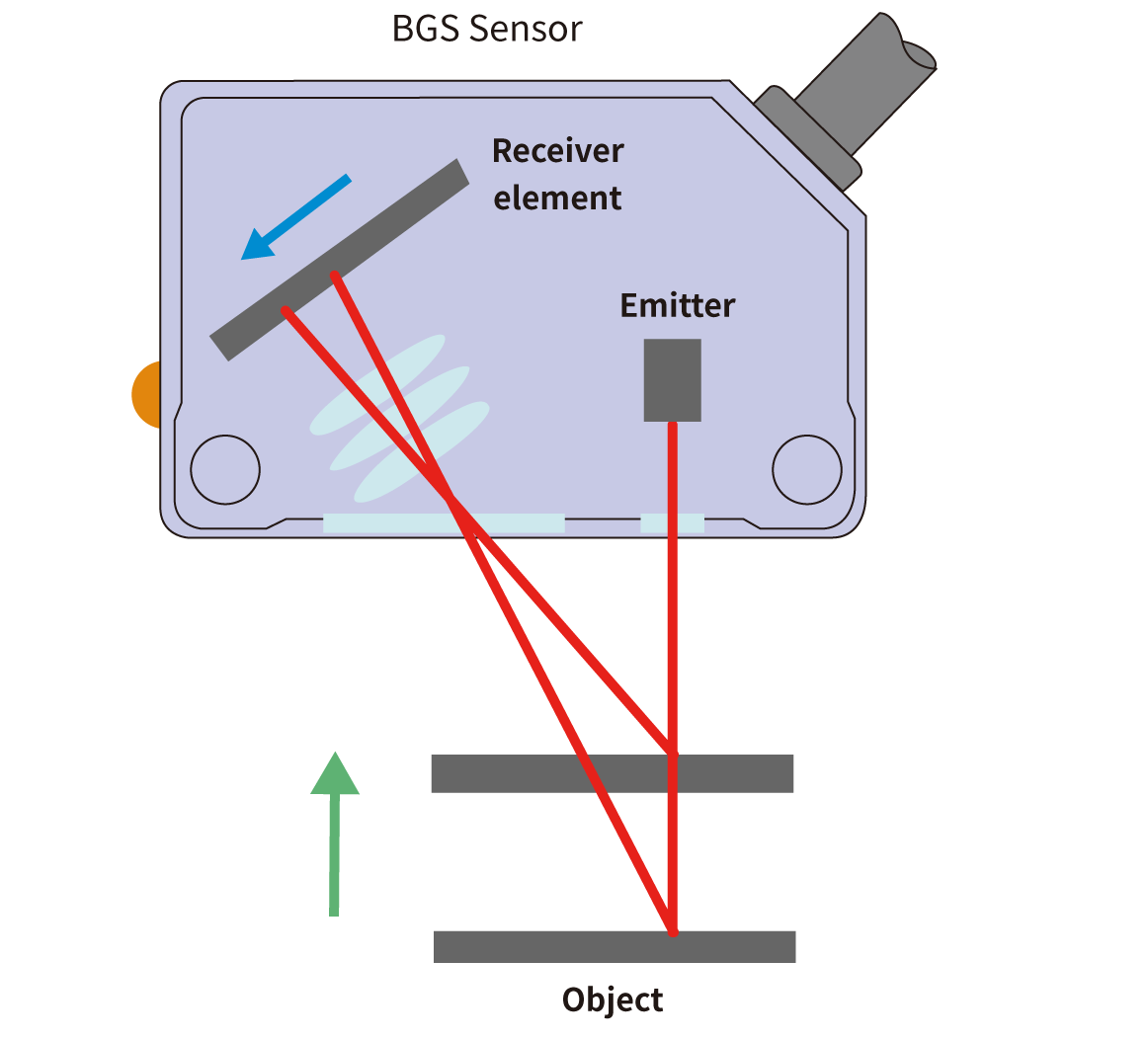
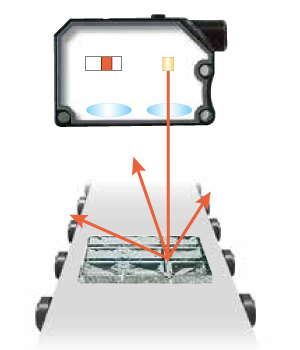
Los sensores BGS funcionan según el principio de la triangulación.
Mientras que los sensores de reflexión difusa convencionales detectan objetos midiendo los cambios en la intensidad de la luz e luz recibida, los sensores BGS determinan la distancia al objetivo.
Como resultado, se ven menos afectados por factores como el color del objeto, el brillo de la superficie y la inclinación del objetivo, lo que permite una detección estable.
Operating Principle of BGS Sensors
La distancia al objeto se determina formando un triángulo entre el emisor, el «elemento receptor de luz» y el objeto.
Cuando cambia la distancia al objeto (flecha verde), también cambia la posición de la luz reflejada en el «elemento receptor de luz» (flecha azul). En otras palabras, la distancia al objeto puede determinarse a partir de la posición de la luz en el «elemento receptor de luz».
Cuándo utilizar un BGS Sensor
- El «reflectancia» del objeto es bajo (el objeto es oscuro).
- El artículo está disponible en varios colores.
- La distancia entre el objeto y el fondo es pequeña (altura de paso mínima).
- El objeto tiene una superficie brillante.
- La superficie de detección del objeto está inclinada.
-
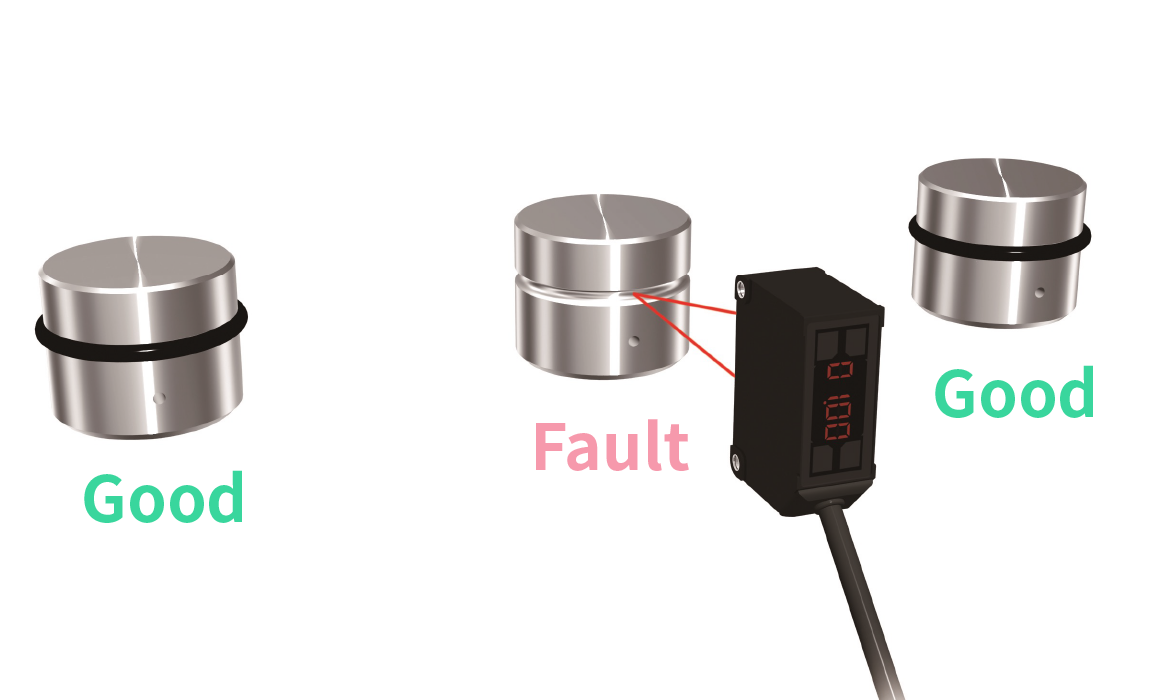
Eficaz para objetos con baja reflectancia
-
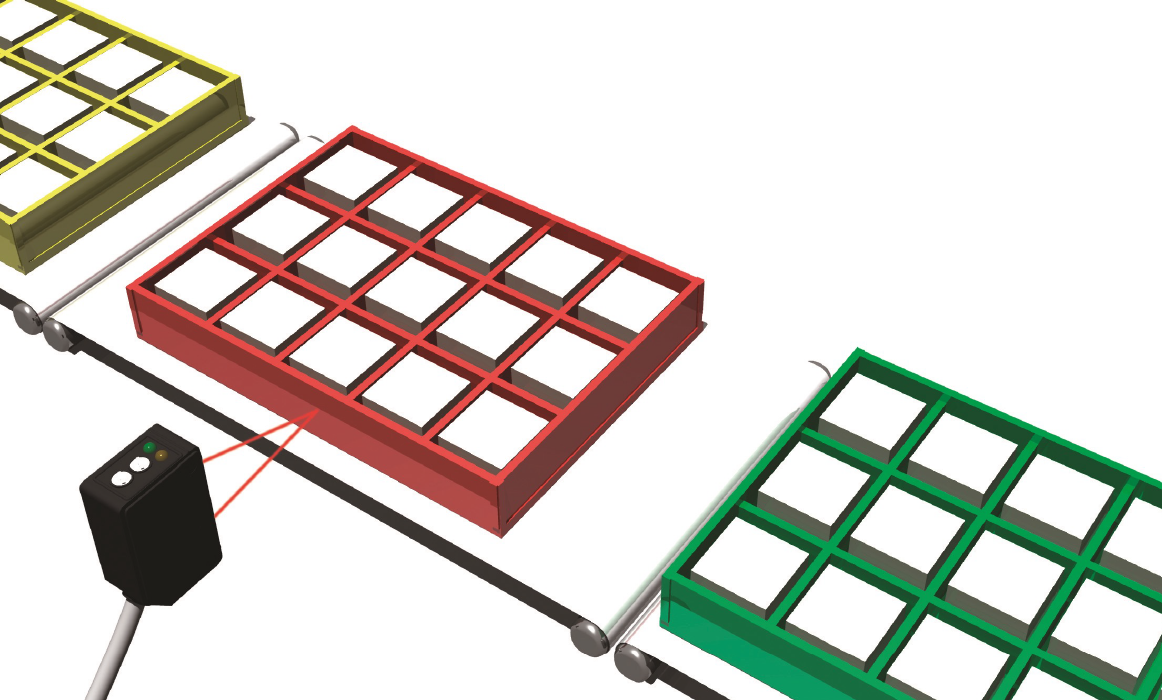
Eficaz para objetos de distintos colores
Puntos clave para elegir un BGS Sensor
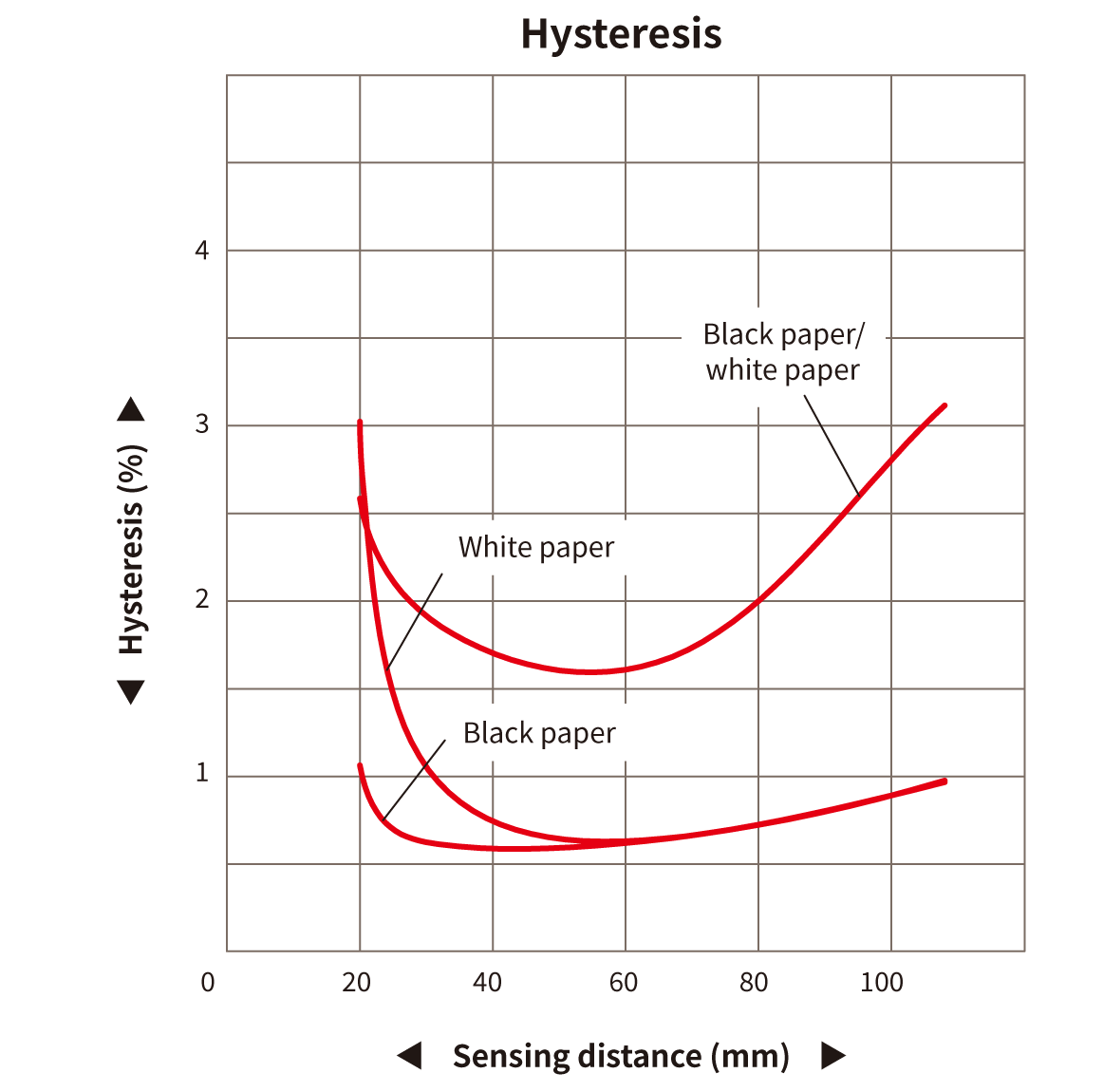
Hysteresis (Minimum Detectable Step)
Este gráfico muestra el paso mínimo detectable para cada color de objeto. Tras confirmar el color y la distancia del objeto (eje horizontal), multiplica la distancia por el valor de «histéresis» (eje vertical) para determinar el paso mínimo que el sensor puede detectar de forma fiable.
Para una detección estable, se recomienda un valor equivalente al doble del valor «histéresis».
Número de salidas de control
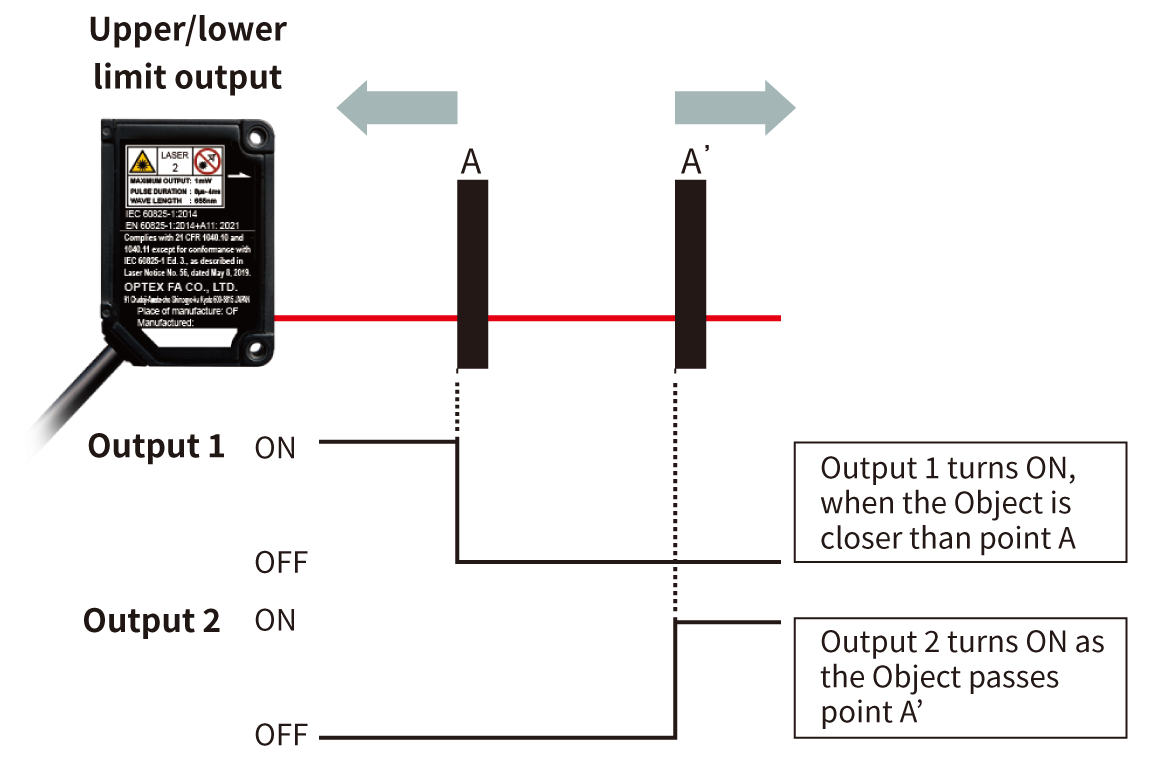
Se refiere al número de salidas disponibles cuando un sensor BGS determina la distancia a un objeto.
El número de salidas de control influye en la gama de aplicaciones que el sensor puede admitir. Por ejemplo, con una sola salida, el sensor puede indicar si el objeto está más cerca o más lejos de la distancia establecida. Sin embargo, con dos salidas, se pueden distinguir ambas condiciones y transmitirlas por separado, lo que permite que un solo sensor realice aplicaciones que antes requerían dos sensores.
FGS Mode
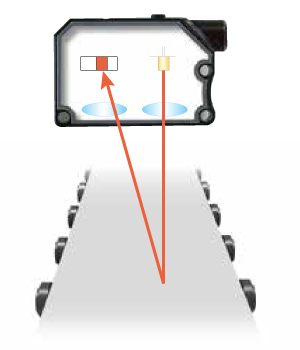
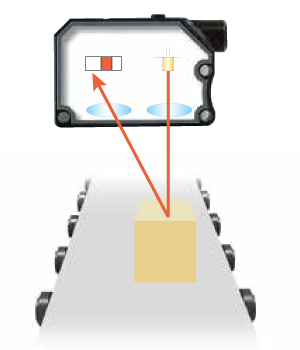
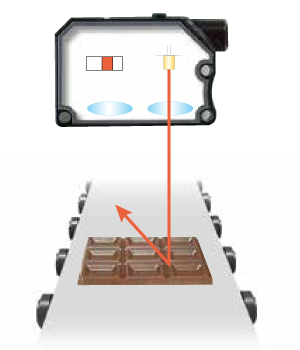
Mientras que el modo BGS ignora los fondos situados más allá del objeto, el modo FGS (supresión de primer plano) utiliza la luz reflejada por el fondo y detecta un objeto cuando este interrumpe la trayectoria de la luz reflejada. Esto permite una detección estable de objetivos difíciles, como objetos delgados y oscuros, u objetos con superficies irregulares o brillantes, que resultan difíciles de detectar con el modo BGS.
Note:
- Para utilizar el modo FGS es necesario un fondo de color claro.
- El modo FGS recibe diferentes nombres según la serie:
Serie ZA-B: FGS de 1 punto
Serie BGS-HL: Zona
Serie BGS-HDL: FGS
| Object | Not Present | Tall | Bajo-reflectancia | Brillante y con irregularidades |
|---|---|---|---|---|
| Resultado | OFF | ON | ON | ON |
| Explanation |
|
|
|
|
Recomendado Modelos
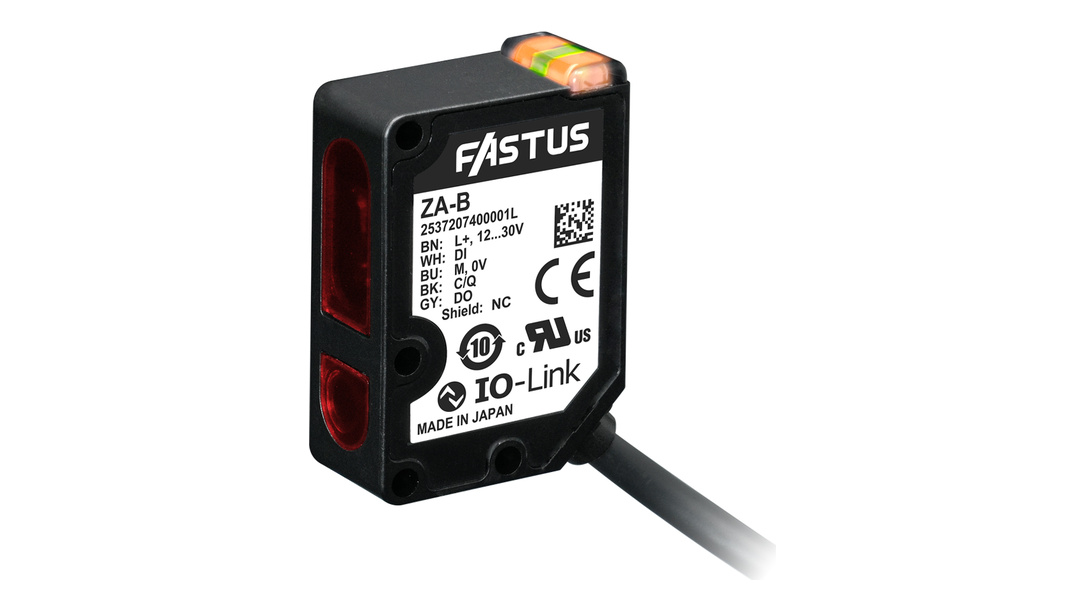

Sensor láser CMOS con amplificador incorporado
Serie ZA-B
Precisión de repetición a nivel de micras con supresión de fondo CMOS sensores láser
- IO-Link Compatibilidad: Se puede conectar a diversas redes de campo a través de IO-Link Master
- Alta resolución Pantalla OLED

BGS «Sensor» con soporte de «IO-Link»
Serie Z4B
LED de alta potencia y punto de iluminación reducido fuente de luz
- IO-Link Compatibilidad: Se puede conectar a diversas redes de campo a través de IO-Link Master
- Mayor resistencia a la iluminancia ambiental
- Nuevos tipos de LED infrarrojos incorporados a la gama
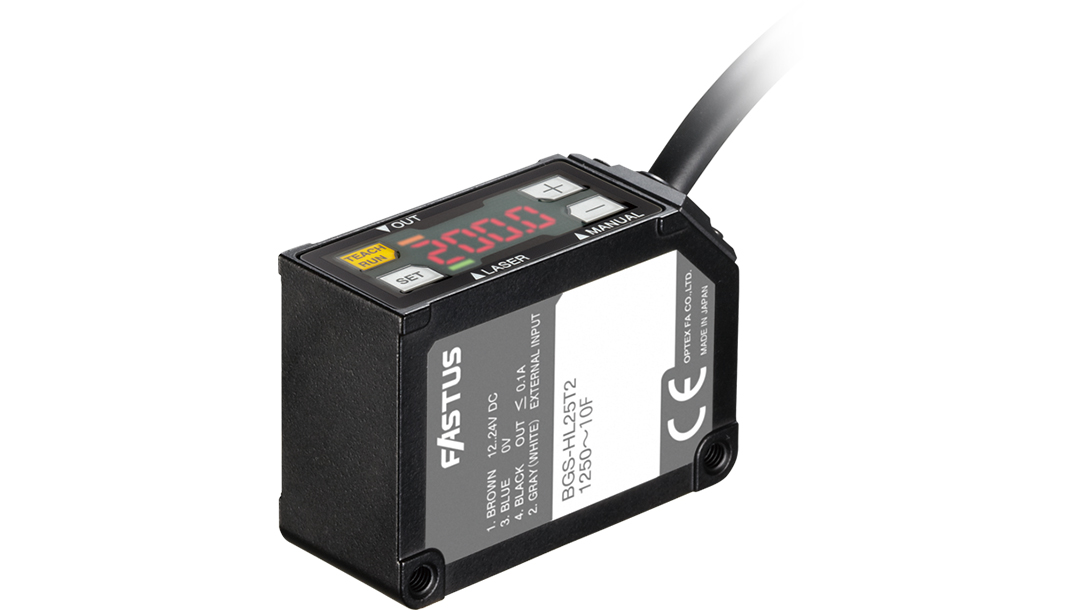
High-accuracy Laser Sensor
BGS-HL/
BGS-HDL Series
High resolution BGS laser sensor
- Diferencia mínima de altura detectable: 0.08 mm (BGS-HL05xx/-HDL05xx)
- Controlador integrado y pantalla de 4 dígitos
- Detección estable independientemente del color del objeto

Standard-sized Sensor
BGS-ZL/
BGS-Z Series
Láser y LED de haz estrecho y alta potencia
- 2 sensing ranges with laser models and 3 sensing ranges with LED models
- Detección de diferencias de altura de gran precisión gracias a su bajo histéresis
- Rápida respuesta de 250 μs en los modelos láser y de 500 μs en los modelos LED
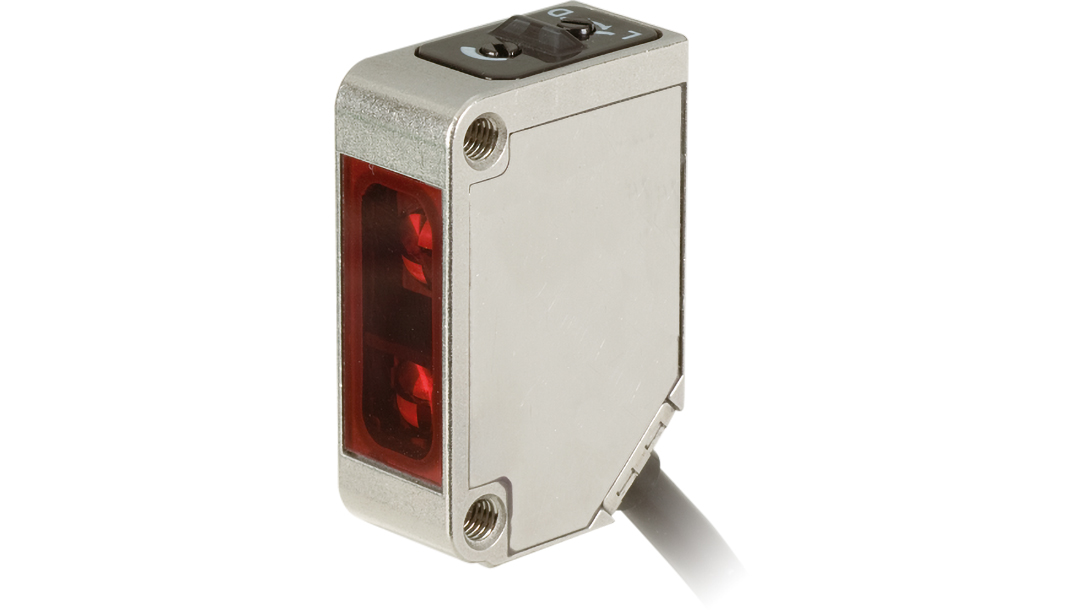
Stainless-steel Housing Sensor
Serie BGS-ZM
Excelente resistencia al agua y al aceite
Apto para automóviles, máquinas-herramienta y la industria alimentaria
- Grado de protección: IP69K (tipo de cable), equivalente a IP67g (tipo de conector)
- Equipado con un potenciómetro de 8 vueltas
- LED rojo de 4 elementos con bajo desgaste
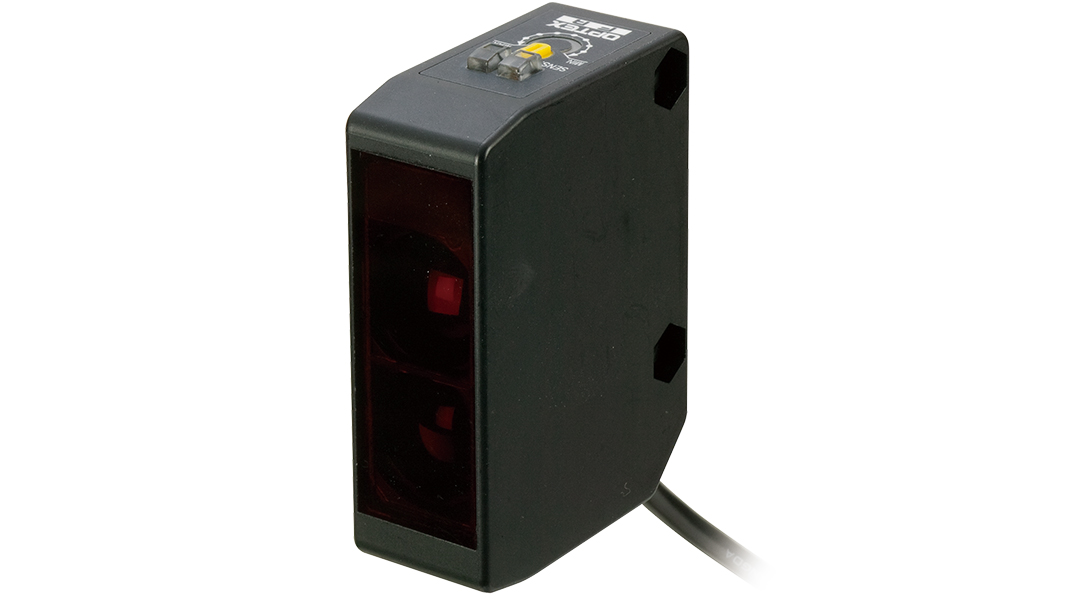
Universal Voltage LED BGS Sensor
Serie BGS-2V
Standard BGS sensor designed as the successor to the BGS-V Series
- La doble lente permite la detección a larga distancia
- distancia de detección o máximo de 1 m
- Tipo de tensión universal que elimina la necesidad de elegir una fuente de alimentación
Contáctenos
Nuestros expertos te ofrecen rápidamente el plan que mejor se adapta a tus necesidades y te brindan asistencia continua durante todo el proceso.
Consultas sobre productos / Soporte técnico- Mi lista
- 20